Justice Paid In Full
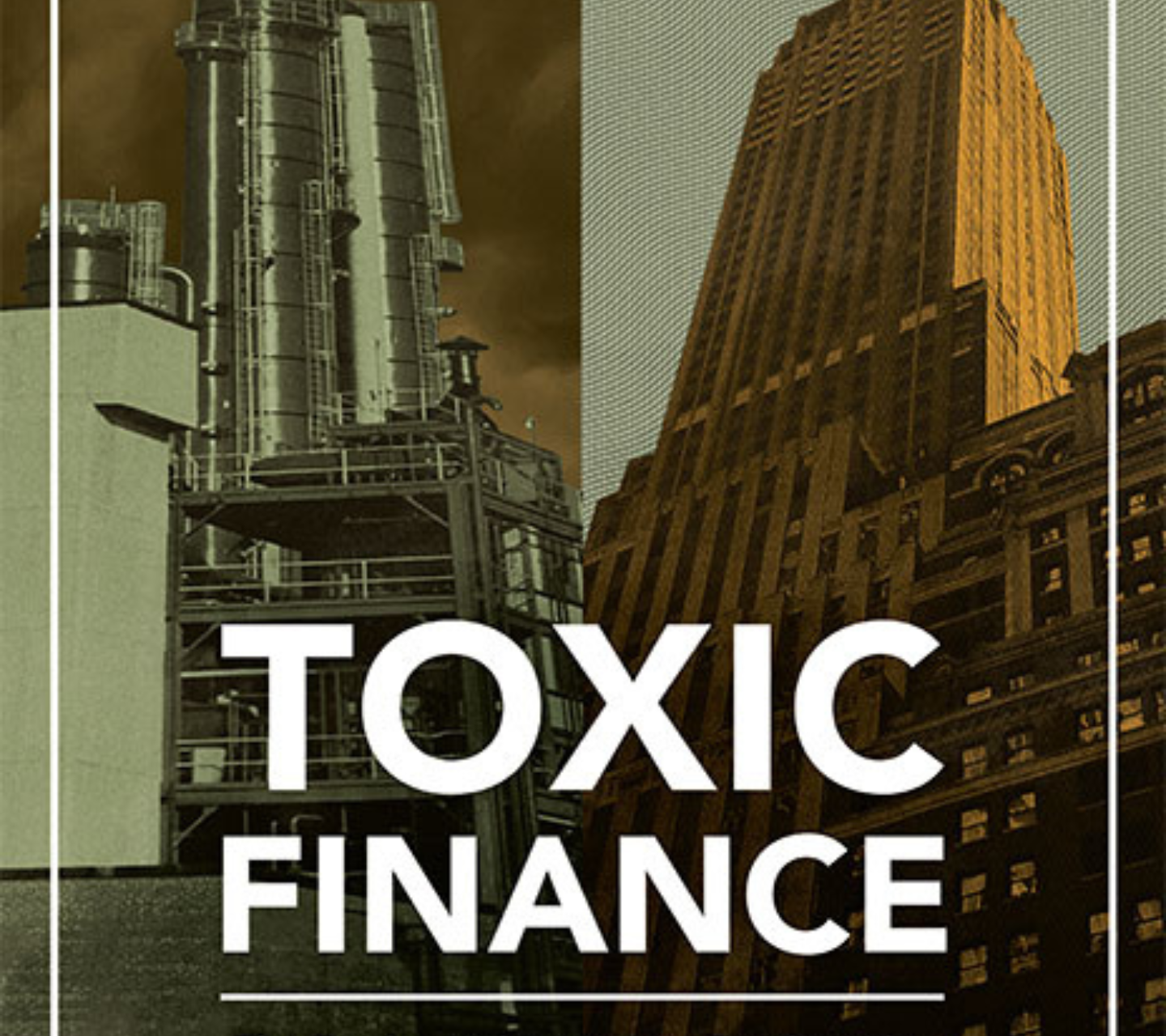
WASHINGTON, March 24, 2026 — Major US and global banks have provided US $133 billion in financing to companies expanding petrochemical production in the United States since 2019 — despite growing evidence that the sector is environmentally destructive, financially unstable, and increasingly exposed to legal liability — according to a new report released today by the Center for International Environmental Law (CIEL), Break Free From Plastic US (BFFP), Friends of the Earth US, the Gulf South Fossil Finance Hub, Texas Campaign for the Environment (TCE), and the People Over Petro Coalition (POPCO).
The report, Toxic Finance: The Banks and Investors Funding the Expansion of Petrochemicals in the United States, names Citi, JP Morgan Chase, Bank of America, and Mizuho among the top financiers helping fund dozens of new plastics, fertilizer, and chemical projects — many clustered in communities already overburdened by toxic air and water pollution. The findings highlight how continued capital flows are accelerating expansion even as the sector faces escalating legal challenges and structural market instability.
“Petrochemical expansion isn’t inevitable — it’s financed. Follow the money and it leads to a small group of repeat actors,” said Brandon Marks, Senior Campaigner at the Center for International Environmental Law. “A concentrated group of banks and asset managers are making decisions that lock in pollution and long-term instability, despite the mounting legal and market risks. Bankrolling petrochemical expansion is not just a financial calculation — it’s a dangerous bet for investors and for the health and future of the communities forced to live with the consequences.”
Petrochemical production, which turns fossil fuels into plastics, fertilizers, and other chemicals, accounts for up to 10 percent of global greenhouse gas emissions and is linked to toxic air and water pollution, cancer risk, and environmental racism, the report says.
“Louisiana is home to hundreds of chemical plants and seven of the ten US census tracts with the highest risk of cancer in the nation; a risk shown to be vastly underestimated by the US EPA. These industries are largely sited in Black and poor white communities who bear toxic burdens without economic benefit. Black workers in particular are disproportionately underrepresented in the petrochemical workforce. Financial institutions have the power to steer positive investment that changes lives, instead of toxic finance that destroys communities. Enough is enough! We refuse to be a sacrifice zone for the global economy,” said Michael Esealuka, Louisiana resident and US Petrochemical Coordinator with Break Free From Plastic.
The analysis also shows that institutional investors hold more than $1.6 trillion in shares and bonds tied to companies leading new petrochemical projects, with five asset managers — Vanguard, BlackRock, State Street, Capital Group, and Berkshire Hathaway — controlling nearly one-third of that investment.
“As the birthplace of petrochemicals, we’ve seen it for generations. Outside investment in toxic industries steals health, prosperity, and livable futures from our communities in the Ohio River Valley. This report reveals that scam in striking numbers. It’s time for our frontline communities to get the investment — not their polluters,” said Cheryl Johncox, Regional Coordinator at People Over Petro Coalition.
The United States is at the center of a global petrochemical boom, with more than 100 petrochemical projects proposed or planned — many concentrated along the Gulf Coast, where communities are already suffering from extreme industrial pollution. At the same time, at least forty-four projects have been canceled and forty-three more put on hold, signaling deep structural instability in the sector.
“Texans can’t afford any more petrochemical pollution! According to the Bullard Center, 90 percent of the dozens of new petrochemical projects proposed across our state are slated for areas with disproportionately higher concentrations of people of color and families living in poverty. Communities in areas like Houston, the Golden Triangle, and the Coastal Bend are already overburdened with industrial pollution, and the construction of more toxic infrastructure would only deepen the environmental racism and classism they already face. Banks and investors need to take responsibility for the impacts of their financing and stop funding the industry that is poisoning our environment and killing our people,” said
Matthew Kennedy, Petrochemical Campaign Coordinator at Texas Campaign for the Environment.
The report documents widespread project cancellations, cost overruns, legal challenges, and shrinking demand, raising red flags for financiers. Despite these risks, the report finds that most financial institutions lack meaningful policies to restrict financing for petrochemical expansion or to protect communities from cumulative harm.
“It’s risky business for banks and investors to finance the petrochemical sector. They are financing companies that continue to produce chemicals that create immediate health crises for local communities and generate waste that can be found from the top of Mount Everest to the bottom of the ocean and throughout nearly all human bodies. It is existentially reckless,” said Paloma Henriques, Senior Petrochemical Campaigner at Friends of the Earth US.
The Toxic Finance report calls on banks to immediately halt financing for new petrochemical expansion and urges asset managers and investors to divest from companies pursuing new projects, adopt emissions reduction targets, and require credible transition plans.
“Toxic finance fuels environmental injustice, and it’s time for banks and investors to stop funding new petrochemical projects. Local communities are demanding accountability, and we will continue to stand firm in our fight for a sustainable future. Our voices matter, and we won’t back down until our demands are met,” said Keondrea Martin, Organizing Director at Vessel Project of Louisiana and Member of the Gulf South Fossil Finance Hub.
The full report and an interactive tool that traces the money behind petrochemical expansion and shows who is funding new projects are available at www.toxicfinance.org.
Media Contact:
For press inquiries, interviews, or more information, please contact: Maria Frausto at press@ciel.org.